
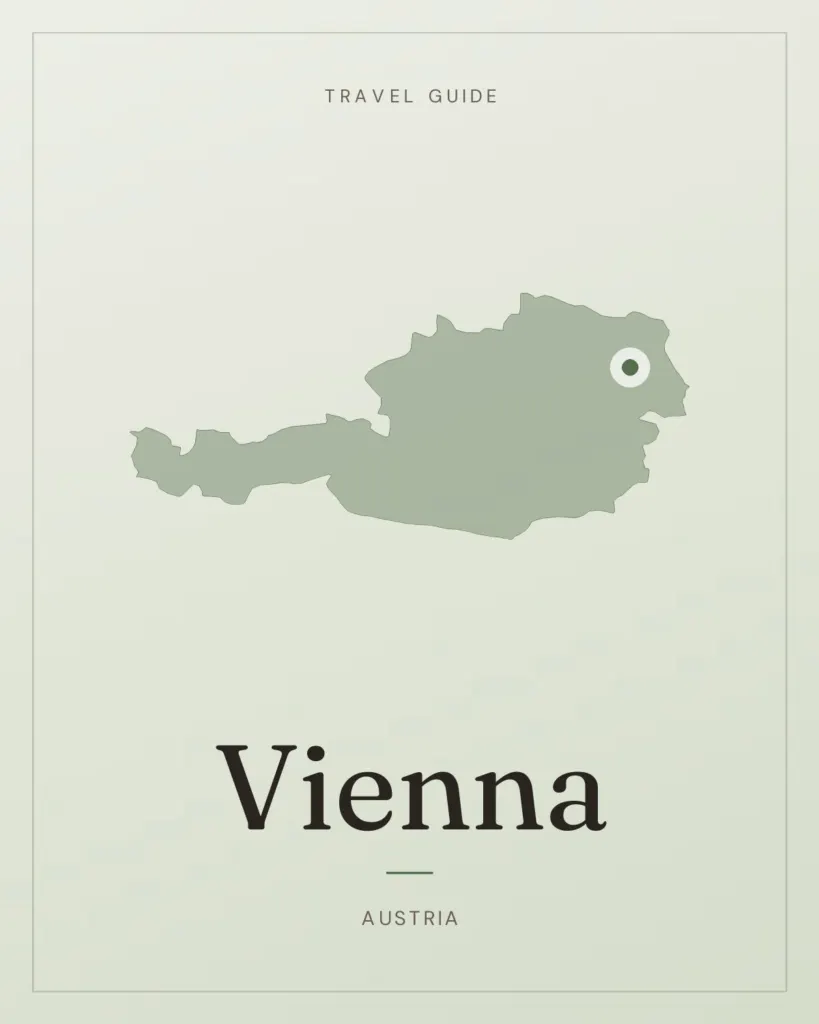
Vienna is grand without being stiff, with imperial palaces, coffee houses, concert halls and a very walkable centre. We have not visited yet, so this is a researched guide to how we would plan it. It is also a good winter city, so see our cosy Christmas city trips for the Christmas side of city trips.
At a glance
- How long: 3 days
- Best time: April–June and September–October, or December for Christmas markets
- Getting there: Vienna International Airport (VIE) with train links, and a modern central station with trains from across Europe
- Good for: Architecture, music, museums, cafés, Christmas markets
Top sights
What to see in Vienna
Schönbrunn Palace
The former imperial summer residence, with baroque rooms and large gardens. Tickets are timed, so check the official site.
Hofburg and the Imperial apartments
The palace complex in the heart of the city, home to the Habsburgs for centuries.
St. Stephen’s Cathedral
The Gothic cathedral with a patterned tiled roof, right in the centre of the old town.
Belvedere
A baroque palace with gardens and an art collection that includes Klimt’s The Kiss.
MuseumsQuartier and the Ringstrasse
The Ring boulevard circles the old town and passes the opera, parliament and the main museums.
The Naschmarkt
A long market with food stalls, restaurants and a lively atmosphere, especially on a weekend morning.
A coffee house visit
Viennese coffee house culture is recognised as intangible cultural heritage. Plan time to sit and linger over coffee and cake.
Three days in Vienna
Day 1: the old town
St. Stephen’s Cathedral, the Hofburg and a long coffee house break. In the evening, consider a concert, checking official sites for tickets.
Day 2: palaces
Schönbrunn Palace in the morning and the Belvedere in the afternoon.
Day 3: the Ring and markets
Walk the Ringstrasse, visit a museum and finish at the Naschmarkt.
With more time, add the Prater and its Ferris wheel, the Danube side of the city or a vineyard walk in the Vienna Woods and the surrounding wine villages.
When to go
Vienna has four clear seasons. Spring and early autumn are mild and ideal for walking the Ring and visiting the palace gardens. Summer can be hot, but the city also has long evenings, parks and the Danube to cool off. Winter is cold, yet Vienna handles it well, with cosy cafés, concerts and the Christmas markets in front of the Rathaus and elsewhere. Since so much to see is indoors, Vienna is a good choice when the weather is uncertain.
Coffee, cake and dinner
Coffee houses are the heart of Viennese life: order a melange and take your time. Classic dishes include Wiener Schnitzel, goulash and Tafelspitz, and pastries such as Sachertorte and apple strudel. Wine is grown inside the city limits, and the traditional wine taverns called Heurige, usually on the outskirts, are a nice evening out. The Naschmarkt is good for casual food, and there is also a growing café and brunch scene.
Where to stay
The Innere Stadt is central and elegant but pricey. Neubau and Mariahilf are lively, with shops and cafés. Leopoldstadt is close to the Prater and has a mix of old and new. Landstrasse is calm and well placed for the Belvedere.
Tickets and getting around
Vienna’s metro, trams and buses are efficient, and the centre is very walkable. Check the official transport site for single and multi-day passes. Concerts and palace visits are popular, so book ahead in high season. Tap water is considered very good. Many museums have one late evening a week, which can be calmer. Sundays are quiet, with many shops closed, but cafés and museums stay open. Coffee houses do not rush you, so a single coffee can buy a long sit, and tipping a little is the custom. A multi-day public transport ticket is usually good value if you plan to use trams and the metro more than a few times each day.
Day trips
Bratislava, in Slovakia, is close by train. The Wachau valley along the Danube, with its abbeys and wine villages, is another classic day out. Vienna also pairs well with Salzburg or Budapest; see our favourite European road trips for more ideas.
FAQ
How many days do you need in Vienna?
Three days is a good first visit. Two works for the highlights only.
When is the best time to visit Vienna?
Spring and early autumn are pleasant, and December is atmospheric with Christmas markets.
Is Vienna walkable?
Yes, the old town and Ring are very walkable, with public transport for the rest.
Can you combine Vienna with Budapest?
Yes, they are linked by direct trains of around two to three hours. Check the current timetable.
Read also: our Munich travel guide, our Krakow travel guide and our Budapest travel guide.



Leave a Reply