
Malta is full of old towns and cute places, as we wrote when we posted this picture from Mdina. We visited in 2018, and the golden walled city is the memory that stayed with us. This guide shares our short Mdina memory plus a researched overview of the island, so you can plan your own trip.
At a glance
- How long: 4–6 days for Malta, plus one day for Gozo
- Best time: April–June and September–October; July and August are hot and busy
- Getting there: Malta International Airport is the main entry point; the Gozo ferry leaves from the north of the main island
- Good for: Old towns, sea views, boat days and history
Top sights
- Mdina, the Silent City
- Valletta
- The Three Cities
- Gozo and the Citadel
- Comino and the Blue Lagoon
- Marsaxlokk fishing village
- Blue Grotto and the south coast
- Dingli Cliffs
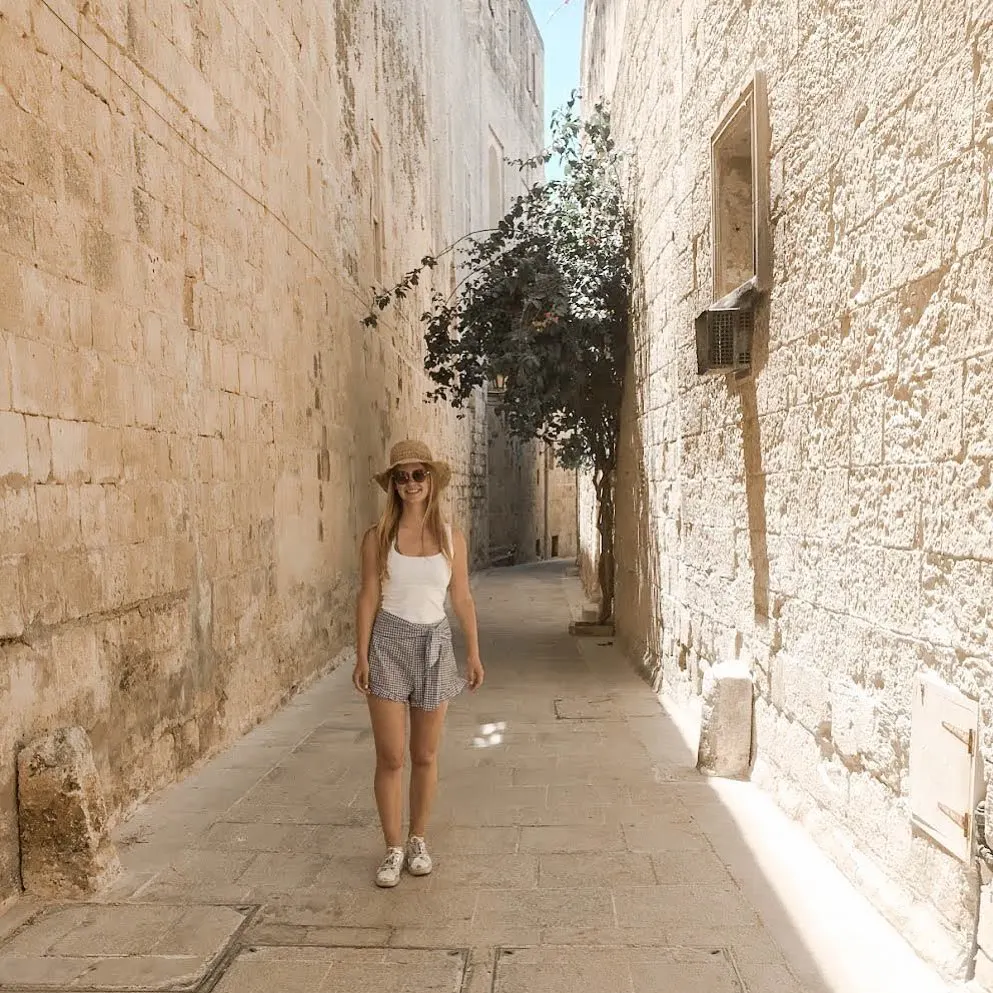
Our trip was in 2018 and we shared the photo in May 2019. We only wrote about Mdina, so our personal part is short and honest: it is a quiet walled city of pale limestone lanes, perfect for slow wandering and photos. For the rest of the island, we rely on what is widely known and give you tips we would follow ourselves.
Top sights in detail
Mdina, the Silent City
Mdina is Malta’s old capital, on a hill in the middle of the island. Its narrow lanes, honey-coloured walls and quiet squares are why it is nicknamed the Silent City. Cars are very limited inside the walls, so it is a lovely place to walk. Go early or late to see it without crowds, and add the neighbouring town of Rabat.
Valletta
The capital is a UNESCO World Heritage city on a peninsula between two harbours. Highlights include St John’s Co-Cathedral, the Upper Barrakka Gardens with views over the Grand Harbour, and the grid of streets with colourful wooden balconies. Fort St Elmo at the tip of the peninsula and the Lower Barrakka Gardens are good additions. Check the official sites for opening times and tickets.
The Three Cities
Vittoriosa (Birgu), Senglea and Cospicua sit across the Grand Harbour from Valletta. They are quieter and full of history. Fort St Angelo in Birgu is the main landmark, and many visitors take a small traditional boat across the harbour for the views of Valletta.
Gozo and the Citadel
Gozo is Malta’s smaller, greener sister island. The Citadel in Victoria, the Ġgantija temples and the coast are the classic day trip. Take the ferry from Ċirkewwa in the north of Malta to Mġarr on Gozo (the crossing takes roughly 25 minutes), and consider staying a night if you have time. Gozo is also known for its diving and its quiet, rural villages.
Comino and the Blue Lagoon
The Blue Lagoon is a famous turquoise bay on the tiny island of Comino. It can be very busy in summer, so go early in the morning or outside peak season. Boats run from Malta and Gozo. Since 2025 visitor numbers at the lagoon are managed: to step ashore in the lagoon area you need a free, timed pass booked online through the official system, so check the latest rules before you go. Swimming from an anchored boat or visiting the quieter bays is a good alternative.
Marsaxlokk and the south
Marsaxlokk is a fishing village known for its colourful luzzu boats. It has a lively market on Sundays and plenty of seafood restaurants. Nearby, the coast has sea views and temples such as Ħaġar Qim.
Blue Grotto and the south coast
The Blue Grotto is a set of sea caves near Żurrieq where the water glows deep blue on a bright, calm morning. Small boats run from the little harbour below the village, but only when the sea allows it, so keep your plans flexible. It combines well with the temples of Ħaġar Qim and Mnajdra and a late lunch in Marsaxlokk.
Dingli Cliffs
Dingli Cliffs are the highest point on Malta, with long views over the sea and a small chapel on the edge. Most people come for sunset, and it is a short ride from Mdina and Rabat. Bring a jacket, since it can be windy up there.
How many days? A suggested itinerary
Day 1
Spend the day in Valletta, from the Upper Barrakka Gardens to St John’s Co-Cathedral. Stay for an evening walk when the stone turns golden.
Day 2
Visit Mdina in the morning and Rabat in the afternoon, then drive to the Dingli Cliffs for sunset.
Day 3
Take the ferry to Gozo for the Citadel, the coast and a swim, or go on a boat day to Comino.
Day 4 and beyond
Visit Marsaxlokk and the Blue Grotto, or the Three Cities, or relax at a beach. With more time, try a boat trip or a dive.
Where to stay
Valletta and Sliema, with St Julian’s next door, have the most hotels, restaurants and bus links. Valletta is best for sightseeing. St Julian’s is livelier at night. The north around Mellieħa has big beaches and resorts and is closest to the Gozo and Comino boats. Gozo is quieter and suits a slow trip.
Getting around and practical tips
- Malta has an extensive public bus network. Check the official transport site for current fares and routes.
- Rabat, next to Mdina, has the St Paul’s Catacombs, a worthwhile stop if you like history.
- Cars drive on the left in Malta.
- A rental car is handy for the countryside, but parking in towns can be hard.
- Bring a hat, sunscreen and water, and shoes with grip for rocky coast and cobbled lanes.
- Many sights are in limestone towns with steps and slopes, so comfortable shoes help.
- English is widely spoken, along with Maltese.
Day trips
Malta is small, so almost everything is a day trip from wherever you stay. Gozo and Comino are the classic ones. Boat trips along the coast are also popular. If you like island hopping, read our Rhodes guide and our Crete travel guide for other Mediterranean islands we know.
More islands
For more sunny islands, see the best beaches we have visited and our Greek island-hopping guide.
FAQ
When did you visit Malta?
We went in 2018 and shared our Mdina photo in May 2019.
How many days do you need in Malta?
Four to six days covers Valletta, Mdina, the south and a day on Gozo.
Is Mdina worth a visit?
Yes. It is a small, quiet walled city that makes a great half-day, especially in the morning or evening.
When is the best time to visit Malta?
Spring and early autumn are the most comfortable. Summer is hot and busy.
Do you need a car in Malta?
Not necessarily. Buses reach most places, but a car gives more freedom for the countryside.


Leave a Reply