
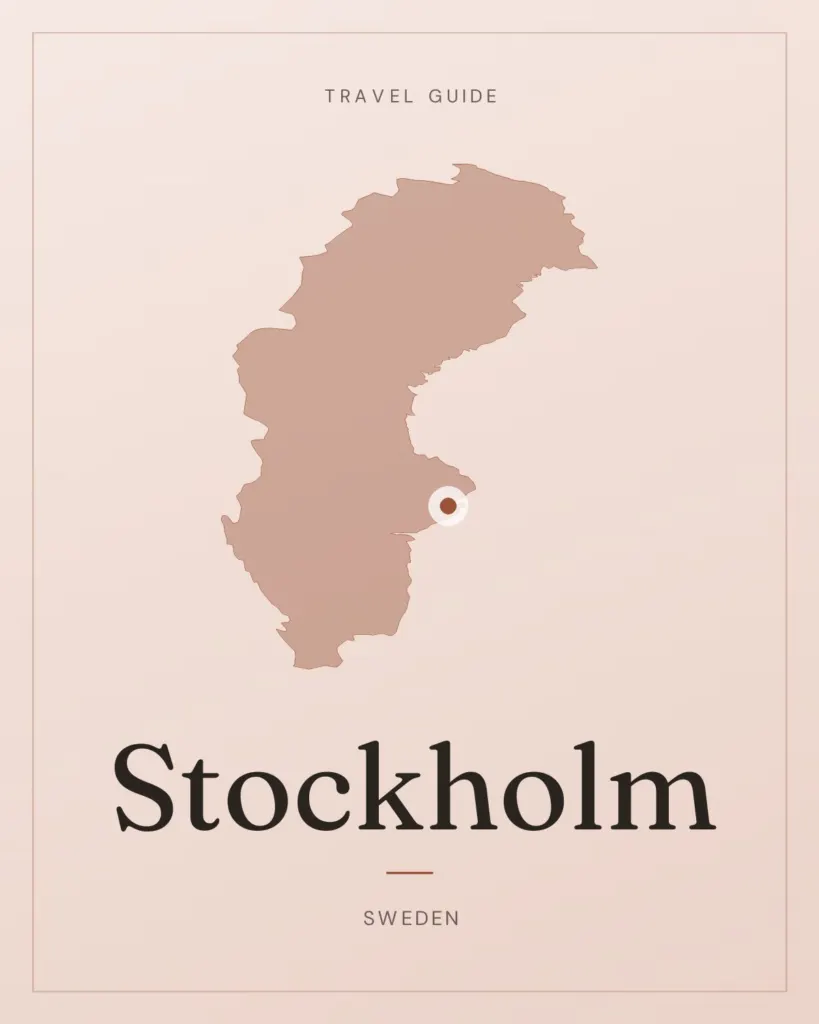
Stockholm is built across 14 islands where Lake Mälaren meets the Baltic Sea, which gives it a watery, open feel unlike most capitals. It combines a medieval old town, excellent museums and a huge archipelago just offshore. We spent a long weekend here at the end of November 2019, just as winter was setting in, and it turned into a trip with a twist: we had planned to continue north to Narvik to see the northern lights, but heavy snowfall cancelled our train and we stayed in Stockholm one more night.
At a glance
- How long: We had a long weekend (28 Nov to 2 Dec 2019); 3 days in the city is a good amount, plus 1–2 for the archipelago
- Best time: June–August for long light evenings and archipelago trips; December for Christmas markets
- Getting there: Stockholm Arlanda is the main airport, with a fast train to the centre; long-distance trains link Sweden with Copenhagen and Oslo
- Good for: City breaks, museum lovers, boat trips, design fans and couples
Top sights
- Gamla Stan
- Vasa Museum
- Djurgården
- The Royal Palace
- Södermalm
- Stockholm City Hall
- The Stockholm archipelago
Top sights in detail
Gamla Stan
The old town is a maze of cobbled lanes and ochre buildings on a small island, home to the Royal Palace and the cathedral. It is touristy but atmospheric, and best early or in the evening. In the first days of winter it felt especially cosy.
Vasa Museum
A 17th-century warship that sank on its maiden voyage and was raised almost intact. It is one of Sweden’s most visited museums and a highlight even if you are not into history.
Djurgården
A green island of parks, museums and walking paths, a short ferry or tram ride from the centre. It is a good half day or full day, particularly in summer.
The Royal Palace
One of Europe’s largest palaces still used for official purposes, in the heart of Gamla Stan. Check the official site for opening and the changing of the guard.
Södermalm
A hilly, creative island with independent cafés, vintage shops and viewpoints over the water. It is a nice place to spend an evening. We also spent a day in and out of cafés and bakeries here and in the centre, which is the best way to wait out cold weather.
Stockholm City Hall
A brick landmark by the water, famous as the venue of the Nobel Prize banquet. The courtyard and the water views are lovely, and the tower can be climbed in summer. It is planned to close for renovation from 2027, so check the official site before you go.
The Stockholm archipelago
Thousands of islands scatter east of the city, reachable by ferry. Even a short boat ride gives rocky shores, red wooden cottages and a very Swedish summer feel.
How many days: a suggested itinerary
Day 1: Gamla Stan and the Royal Palace in the morning, then a stroll along the water to City Hall.
Day 2: Djurgården with the Vasa Museum and a walk through the park, finishing with the evening on Södermalm.
Day 3: Take a boat out into the archipelago, such as one of the nearer islands, for a half or full day.
With more time, add a night on an archipelago island or explore more of the city’s museums.
Our trip: We flew in on 29 November and spent the days wandering the city, with the first snow around us. Watching the city wake up in the early morning and seeing it light up by night were highlights, and we loved the metro stations, which are decorated like small art galleries. When our train north was cancelled, we simply stayed one more night and enjoyed the city a bit longer.
Where to stay
Gamla Stan is atmospheric but pricey and touristy, while Norrmalm is central and practical for trains. Södermalm is trendy and has good dining, and Östermalm is elegant and quieter. Choose a base near a metro station.
Getting around and practical tips
Stockholm’s metro, trams, buses and ferries are easy to use, and the centre is walkable. Ferries link the islands and are an attraction in themselves. Check the official transport site for tickets and passes. Do not skip the metro: some of the stations look like art installations, and more stations should look like this.
Sweden uses the Swedish krona and is almost entirely cashless. Summer has very long days and winters are dark. Archipelago ferries can be infrequent, so check timetables on the official site before you go. Pack layers, because the breeze off the water can feel cool.
Stockholm rewards a slower pace. Rather than trying to see every museum, pick one or two and leave time for the waterfront, the ferries and a long fika break, the Swedish coffee and pastry tradition. The city looks very different between seasons, from bright summer evenings on the water to candlelit winter afternoons. Our own trip was in early winter, and the weather decided part of it: heavy snowfall cancelled our train to Narvik, so keep your plans flexible in winter.
Day trips
If you want to continue north from Stockholm by night train, such as to Narvik for the northern lights, book well ahead. After our cancelled train, the next one that was running was fully booked, so we took the train to Oslo instead and flew home from there on 3 December. The archipelago is the main day trip, with islands such as Vaxholm and Fjäderholmarna known as nearby options. Uppsala, with its cathedral and university, is a short train ride north. Drottningholm Palace, a UNESCO site, is on a lakeside island and can be reached by boat or transit.
FAQ
How many days do you need in Stockholm?
Three days is a good amount for the city, with an extra day or two if you want to explore the archipelago.
Is Stockholm expensive?
It is on the pricier side, though museums and walking cost little. Lunch menus are usually good value.
When is the best time to visit?
Summer for the archipelago and long evenings, or early winter for a cosy, snowy feel like we had.
Can you do the archipelago as a day trip?
Yes. Nearby islands are an hour or less by boat, and longer trips can be done with an overnight.
If you like northern capitals, read our cosy Christmas city trips and winter destinations. For more city ideas, try our Amsterdam city guide and London travel guide, and use our how we plan a trip for planning.


Leave a Reply