
Seville was one of our city trips in the summer of 2019, and the photo we took at the Plaza de España fountain is still one of our favourites from those years. This is our Seville guide: what we remember from our visit, plus the sights and tips we would give a friend planning a trip to the Andalusian capital.
At a glance
- How long: 2–3 days
- Best time: March–May and October–November; July and August are very hot
- Getting there: Seville has its own airport, and fast trains link it to Madrid and other Andalusian cities
- Good for: Couples, architecture, tapas evenings and photography
Top sights
- Plaza de España
- Real Alcázar
- Seville Cathedral and the Giralda
- Barrio Santa Cruz
- Parque de María Luisa
- Triana and the Guadalquivir river
- Metropol Parasol (Las Setas)
- A flamenco show
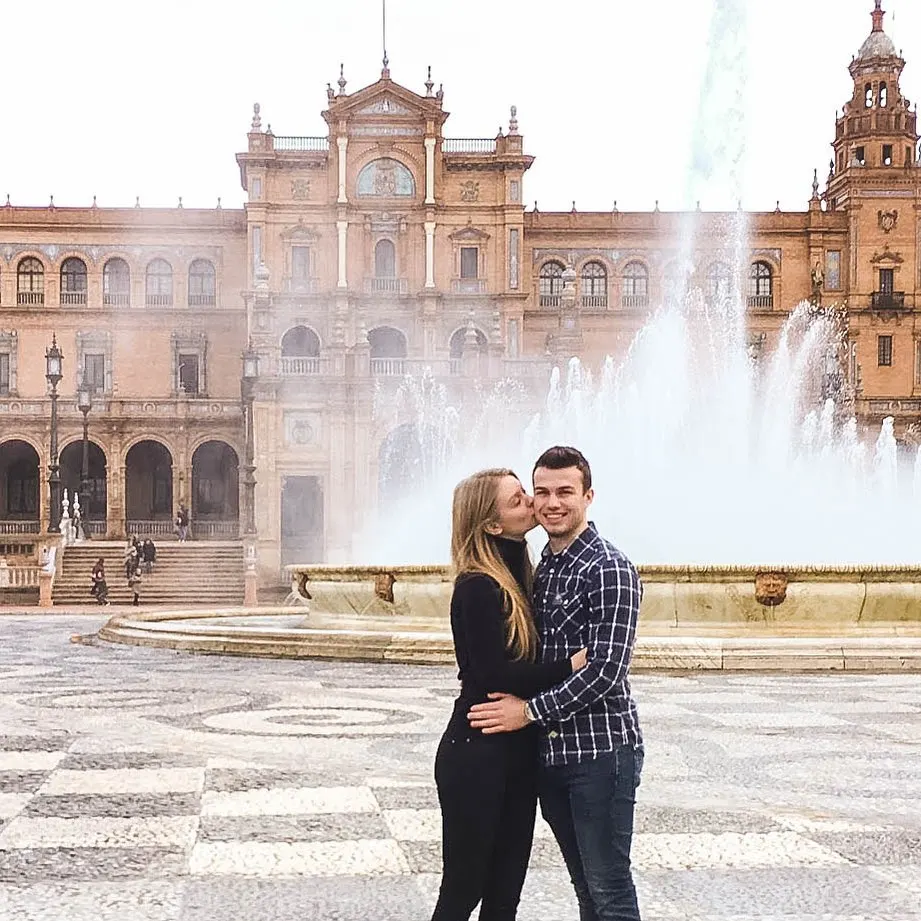
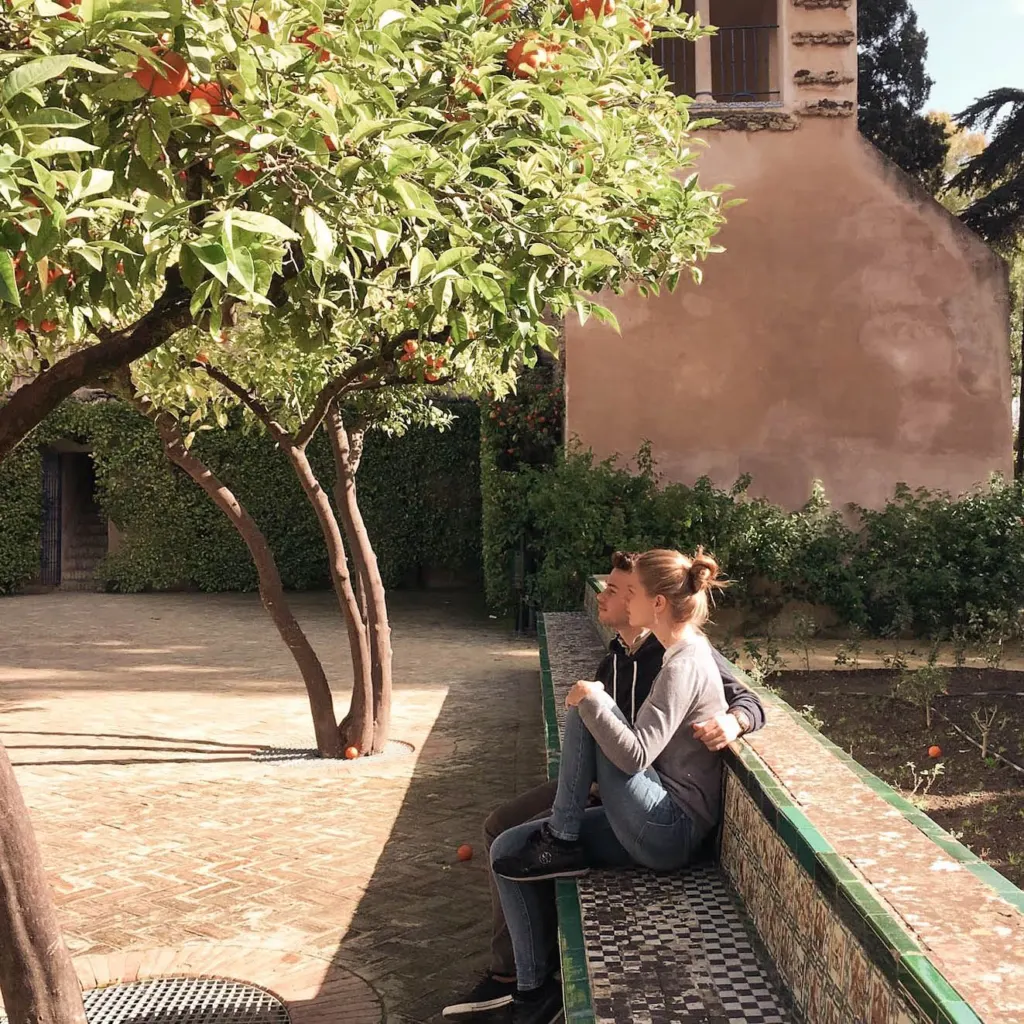
We went in July and August 2019, so we saw Seville in proper Spanish summer. Our captions from that trip are about the places where we slowed down: the fountain at the Plaza de España, and a quiet bench in a garden with orange trees and patterned tiles. If you only remember one thing from our visit, it is this: in summer Seville rewards slow mornings and long breaks in the shade.
Top sights in detail
Plaza de España
This huge half-circle plaza was built for the 1929 Ibero-American Exposition. It has a canal, small bridges, a fountain in the middle and tiled alcoves that represent the provinces of Spain. We took our fountain photo here, and it is the one place we would tell everyone to see. Go early in the morning or near sunset for softer light and fewer people.
Real Alcázar
The Alcázar is a royal palace with Moorish-style courtyards, tiled rooms and large gardens. It is one of the best-known sights in the city, and the gardens are a pleasant place to cool down. Parts of it will look familiar to Game of Thrones fans, who know it as Dorne. Timed tickets are in demand, so check the official site, book ahead and aim for the first slot of the morning.
Seville Cathedral and the Giralda
The cathedral is one of the largest in the world, and the Giralda bell tower, which began as a minaret, is the landmark you will see from many streets. Plan on an hour or two, and expect queues in high season.
Barrio Santa Cruz
The old Jewish quarter is a maze of narrow white lanes, small squares and orange trees. It is easy to get a little lost here, which is part of the charm. It is also a good place to look for tapas.
Parque de María Luisa
The green park next to the Plaza de España is a good place for shade, fountains and a slower pace. Walking through it between the plaza and the centre is a nice way to spend an afternoon.
Triana and the river
Cross the Guadalquivir to Triana, a neighbourhood known for its ceramics, flamenco history and relaxed evenings by the river. It feels more local than the centre, and the riverside is a pleasant place for a sunset stroll.
Metropol Parasol (Las Setas)
Locals call this giant wooden structure on the Plaza de la Encarnación “the mushrooms”. A walkway on top gives wide views over the rooftops, which is especially nice near sunset, and Roman remains are displayed underneath. Check the official site for current opening times and tickets.
A flamenco show
Flamenco is part of Seville’s identity, and Triana is often called one of its birthplaces. Most visitors choose between a small, intimate tablao and a bigger theatre performance. The small venues are popular, so book ahead and arrive a little early for a good seat.
How many days? A suggested itinerary
Day 1
Start at the Plaza de España in the morning, walk through the Parque de María Luisa, and spend the afternoon in the Barrio Santa Cruz. End with tapas in the old town.
Day 2
Visit the Real Alcázar when it opens, then see the cathedral and the Giralda. In the evening, cross the river to Triana for dinner.
Day 3 (or with more time)
Go up the Metropol Parasol for city views, visit a flamenco show, or take a day trip. With more time, add a slower evening along the river.
Where to stay
For a first visit, the historic centre and the Barrio Santa Cruz put you within walking distance of most sights. The area around the cathedral is lively and convenient. Triana is quieter, with more local restaurants, and the streets near the Plaza de España and the park are calmer. In summer, a place with air conditioning (and ideally a small pool) makes a big difference.
Getting around and practical tips
- The centre is compact and very walkable, so you rarely need transport between the main sights.
- Do most of your sightseeing in the morning and evening in summer. Midday is for the shade, a long lunch or a rest.
- Bring a water bottle, a hat and comfortable shoes for cobbled streets.
- Book the Real Alcázar and the cathedral ahead of time through the official sites.
- Many smaller shops close for a long break in the mid-afternoon, so plan your shopping for the morning or early evening.
- Dinner is late in Andalusia, so many restaurants only fill up after 8:30 or 9 pm.
Day trips
Seville works as a base for other Andalusian cities. Córdoba, with its famous Mezquita, is reachable by train, and Granada, home of the Alhambra, is a longer day. Many people also visit Jerez or Cádiz for sherry and coast. Closer to town, the Roman ruins of Itálica lie just outside the city. Check the current timetables before you plan.
More Spain
Spain is a country we keep coming back to. Read about our tips for where to stay in Mallorca and our Ibiza guide, or see our favourite European road trips for more ideas.
FAQ
When did you visit Seville?
We visited in the summer of 2019, in July and August. Our Plaza de España photo is from that trip.
How many days do you need in Seville?
Two to three days is enough for the main sights at a relaxed pace.
When is the best time to visit Seville?
Spring and autumn are the most comfortable. Summer is very hot, so plan sightseeing early and late in the day.
Is Seville good for a couples trip?
Yes. It has romantic old streets, gardens, tapas evenings and plenty of photo spots, as the Plaza de España shows.
Read also: our Madrid travel guide, our Granada travel guide and our Lisbon travel guide.




Leave a Reply